BRAIN HEALTH PSYCHIATRY • SEPTEMBER 2026
Is Online Psychiatry as Effective as In-Person Care? What a New 2026 Study Found
A study of more than 813,000 patients found encouraging outcomes for video mental-health care—but the details matter.
Free-to-use stock photo: Pexels / Kaboompics.
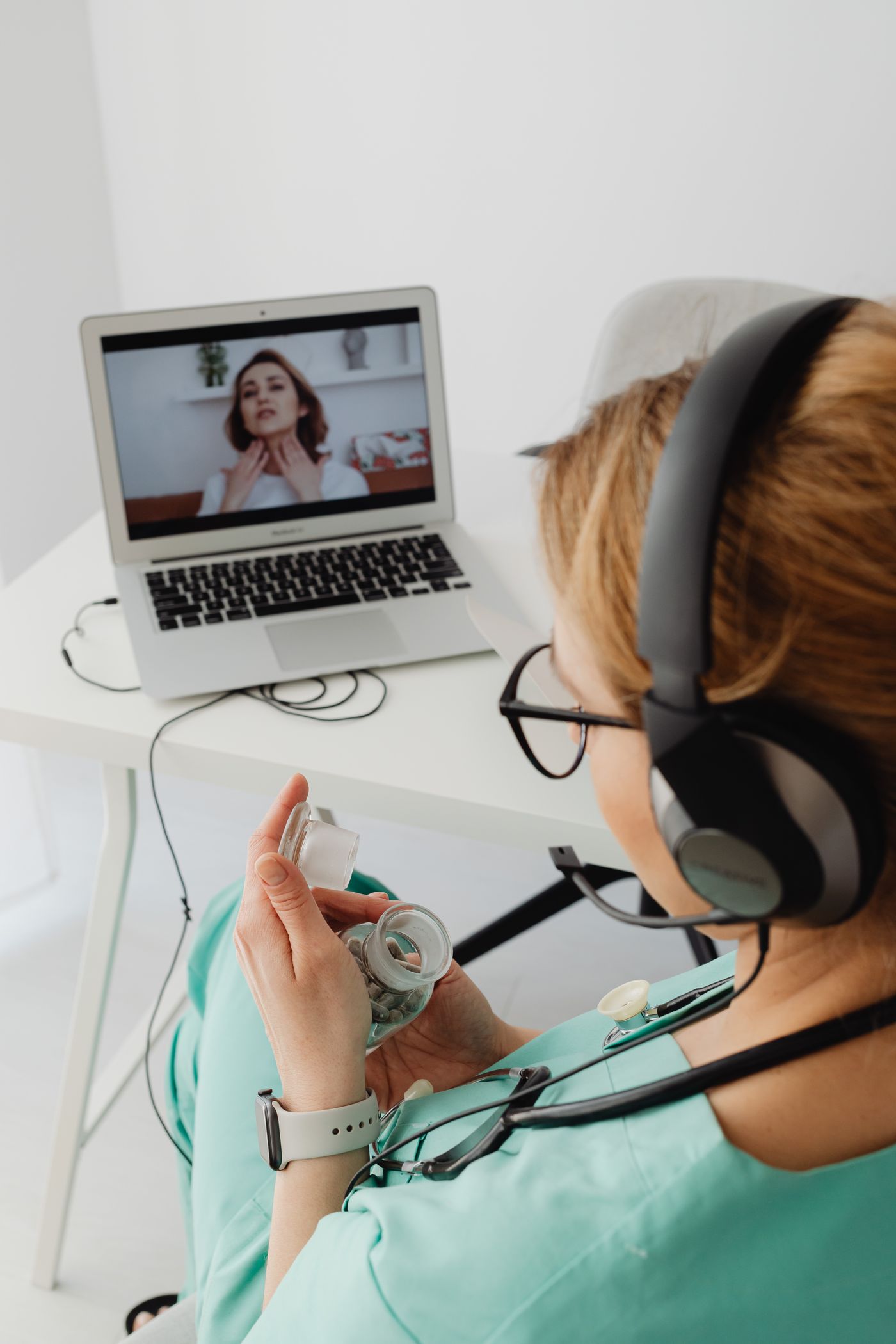
Telehealth is no longer a temporary workaround for mental-health care. Video appointments have become a routine way for many people to meet with therapists, psychiatrists, and other mental-health clinicians. For patients balancing work, parenting, transportation, anxiety, or long travel distances, connecting from home can make treatment easier to start and easier to continue.
A large new study published in JAMA Network Open on September 8, 2026 adds useful information to this conversation. Researchers compared outcomes among 813,699 patients in the U.S. Department of Veterans Affairs health system who received most of their outpatient mental-health care by video, telephone, or in person. The results are encouraging for video care—but they do not prove that video is automatically better for every patient.
What the new study found
Researchers examined mental-health hospitalizations, mental-health emergency department visits, documented suicidal behaviors, and the percentage of scheduled appointments patients completed. After statistical adjustment, the group receiving mostly video care had lower expected rates of the three acute clinical outcomes and completed a greater percentage of appointments than the phone and in-person groups.
The attendance difference was measurable: expected appointment completion was about 4.1 percentage points higher for video compared with phone care and 3.6 points higher compared with in-person care. The estimated differences in hospitalization, emergency visits, and suicidal behavior were smaller.
Among 813,699 VA patients, mostly video-based mental-health care was associated with lower expected rates of mental-health hospitalization, emergency visits, and documented suicidal behavior, plus higher appointment completion. The study was observational, the estimated clinical differences were small, and unmeasured differences between groups may remain.
Association is not the same as proof
This is the most important limitation. The study was retrospective and observational. Patients were not randomly assigned to video, phone, or in-person treatment. Researchers used sophisticated statistical methods to account for differences between groups, but they could not eliminate every possible source of bias.
The authors specifically noted that patients in the video group appeared healthier and better resourced in some ways. Someone with reliable internet, a private place to talk, comfort with technology, and enough stability to attend video appointments may differ from someone who relies on telephone care or needs in-person services. Those differences can influence outcomes.
The responsible interpretation is that video-based mental-health care was associated with certain favorable outcomes in this study. The research does not establish that video itself caused those outcomes, and the authors described the effect estimates as small.
Why might video have practical advantages?
Video occupies an interesting middle ground. It preserves many visual cues that are missing during a phone call—facial expression, eye contact, movement, affect, and aspects of a person's environment—while removing the travel time of an office visit. Those details may help communication and clinical assessment.
Convenience may matter too. A patient who does not need to drive, arrange transportation, leave work as early, or sit in a waiting room may find it easier to keep an appointment. The study found higher appointment completion in the video group, although it was not designed to prove exactly why that happened.
Free-to-use stock photo: Pexels / Polina Zimmerman.
Clinical interpretation still matters. Some patients feel more comfortable opening up from home. Others feel safer or more focused in an office. Some situations require physical examination, closer observation, testing, a higher level of care, or an in-person response. Technology access, privacy, hearing or vision needs, language, age, diagnosis, and personal preference can all affect which format works best.
What about phone appointments?
Phone care can be extremely valuable, especially when video is unavailable, internet service is unreliable, or a patient cannot easily use a video platform. The new study should not be read as saying that phone care is ineffective. It compared outcomes among different groups receiving real-world care and found possible advantages for video on the outcomes measured.
For some people, a phone appointment may be the difference between receiving care and receiving no care. Access matters. The best modality is not simply the one that performs best in one data set; it is the one that is clinically appropriate, accessible, safe, and workable for the individual.
What this means for patients choosing online psychiatry
If you are considering telepsychiatry, it is reasonable to ask whether your symptoms and treatment needs can be managed appropriately by video. For many routine outpatient situations—including follow-up visits, medication management, and some psychiatric evaluations—video can offer meaningful convenience while preserving face-to-face interaction.
Before a virtual appointment, choose a private location when possible, test your camera and audio, have your medication list available, and write down the symptoms or questions you want to discuss. Be honest if something has changed significantly since your last visit. A virtual visit is still a clinical visit, and the quality of the information you share helps your provider make safer decisions.
Patients should also provide accurate information about where they are physically located during the appointment when asked. Telehealth is subject to professional licensing and other rules, and clinicians may need the patient's location to determine whether they can legally and appropriately provide care.
A better question than “Which one is best?”
The more useful question may be: which format gives this particular patient the best combination of access, safety, communication, continuity, and clinical appropriateness? For one person, that may be video. For another, it may be in-person care. Sometimes a patient may use both at different points in treatment.
The new study is reassuring evidence that video mental-health care can be a serious, clinically meaningful form of care—not merely a convenient substitute. But good mental-health treatment still depends on the relationship with the clinician, an appropriate evaluation, accurate diagnosis, follow-up, and a treatment plan tailored to the person.
- Video care showed encouraging outcomes, but it was not proven superior for every patient.
- Video may preserve visual communication while reducing transportation and scheduling barriers.
- Phone care remains an important access option when video is not practical.
- Some symptoms and situations may require in-person assessment or a higher level of care.
- Choose the format with your clinician based on safety, clinical needs, access, and preference.
Brain Health Psychiatry
Talk with our team about whether telehealth or in-person mental-health care is appropriate for you.
Phone: (954) 694-7292
Address: 2151 W Hillsboro Blvd, Suite 211, Deerfield Beach, FL 33442
Sources & References
- Connolly SL, Raciborski RA, Abdulkerim H, et al. Comparative Outcomes of Video, Phone, and In-Person Mental Health Care. JAMA Network Open. September 8, 2026;9(9):e2633396. doi:10.1001/jamanetworkopen.2026.33396.
- PubMed. PMID: 42709434.
Educational information only; not individualized medical or psychiatric advice.