Could Better Sleep and Strength Training Support Your Mental Health?
New 2026 research offers a useful reminder: mental health is connected to sleep, movement, stress, biology, relationships, and treatment—not just one habit.

Royalty-free supporting image from Pexels.
If you have ever gone through a period of anxiety or depression, you may have heard advice like “just exercise” or “get more sleep.” That can feel dismissive—especially when getting out of bed, quieting your thoughts, or keeping a routine already feels difficult.
So let’s be clear from the beginning: depression and anxiety are not failures of discipline, and exercise is not a substitute for appropriate mental health treatment. At the same time, lifestyle patterns can be meaningful pieces of a much larger mental-health picture. A recently published U.S. study gives us new data worth understanding without exaggerating it.
What the new 2026 study found
A study published online on August 18, 2026, in the Kansas Journal of Medicine analyzed data from 7,278 U.S. adults who participated in the 2024 Health Information National Trends Survey. Researchers examined whether physical activity, muscle-strengthening exercise, and sleep duration were associated with screening measures for depression, anxiety, and loneliness.
Adults who met strength-training guidelines had lower adjusted odds of screening positive for depression and lower odds of loneliness. Getting the recommended 7–9 hours of weekend sleep was associated with lower odds of depression, anxiety, and loneliness. Adequate weekday sleep was also associated with lower social and emotional loneliness.
One interesting detail was that meeting the study’s moderate-intensity aerobic activity threshold was not independently associated with the emotional-health outcomes after adjustment. That does not mean walking, cycling, swimming, or other aerobic exercise “doesn’t help mental health.” It means this particular analysis did not find an independent statistical association after accounting for other variables.
Association is not the same as cause
This distinction matters. The study was cross-sectional: it looked at behaviors and mental-health measures at a particular period rather than randomly assigning people to sleep or exercise programs and following the results. Because of that design, researchers cannot say that strength training caused lower depression or that sleeping 7–9 hours caused lower anxiety.
The relationship can also work in the other direction. Depression may reduce motivation and energy. Anxiety may interfere with falling asleep. Stress can disrupt routines. Physical illness, medications, work schedules, caregiving, finances, chronic pain, and many other factors can affect both sleep and activity.
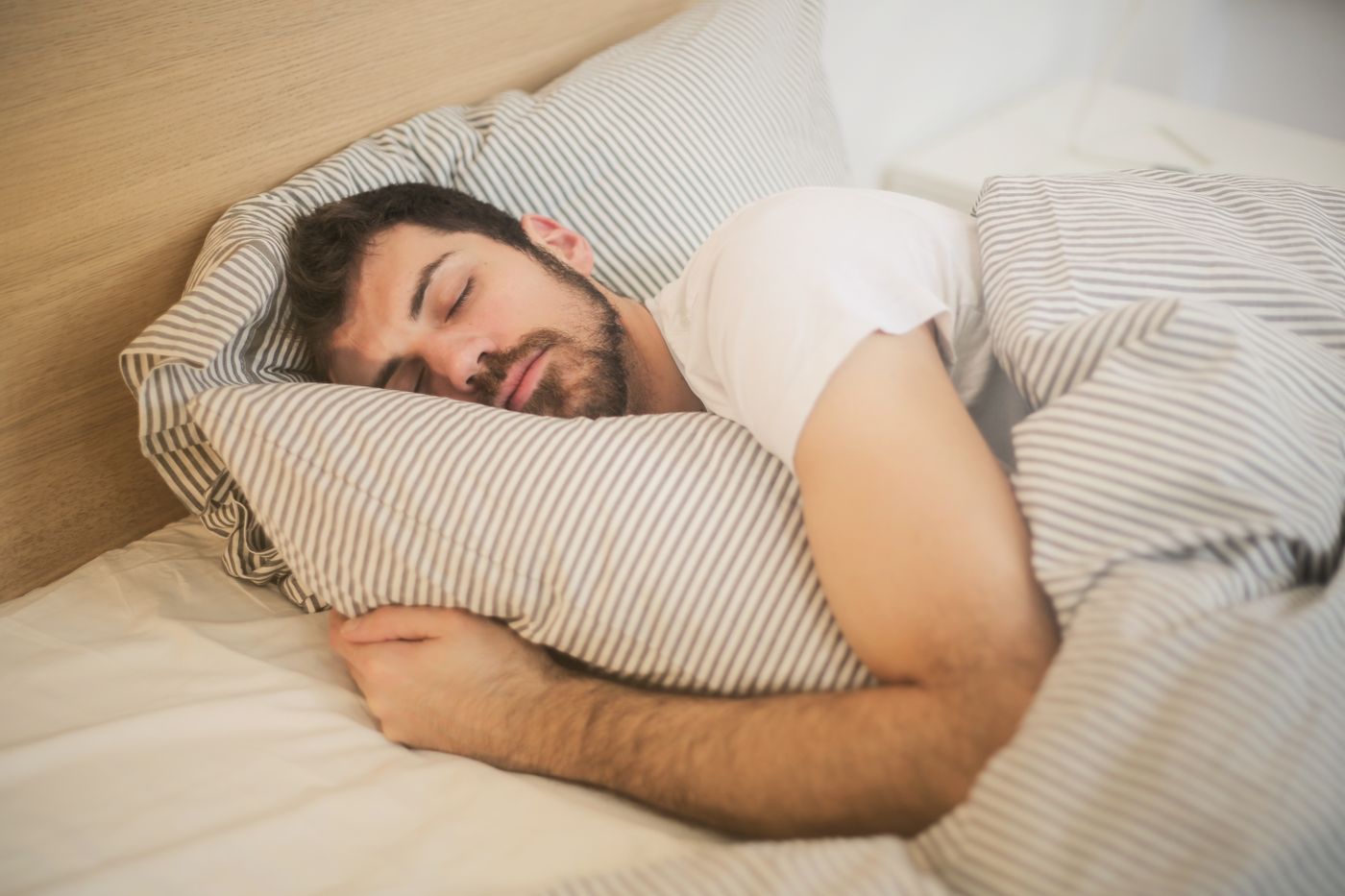
Why sleep deserves attention
Royalty-free supporting image from Pexels.
Sleep and emotional health are closely connected. When sleep is repeatedly shortened or disrupted, concentration, patience, emotional regulation, and energy may suffer. At the same time, racing thoughts, panic, depression, trauma symptoms, ADHD, substance use, and other conditions can make consistent sleep much harder.
That is why clinicians often ask about sleep during a psychiatric evaluation. The goal is not simply to tell someone to go to bed earlier. We want to understand the pattern: Are you struggling to fall asleep? Waking frequently? Sleeping much more than usual? Feeling exhausted despite enough time in bed? Has your need for sleep suddenly decreased while your energy has increased? Those details can provide important clinical context.
What about strength training?
The CDC recommends that adults get at least 150 minutes of moderate-intensity aerobic activity each week, or an equivalent amount of vigorous activity, plus muscle-strengthening activity on at least two days per week. Those are general health guidelines—not a prescription for treating depression or anxiety.
Strength training does not have to mean intense bodybuilding. Depending on your health and abilities, it can include weights, resistance bands, body-weight exercises, some forms of yoga, or other resistance-based movement. If you have a chronic health condition, injury, disability, are pregnant, or have been inactive and plan to begin vigorous exercise, individualized medical guidance may be appropriate.
What this can look like in real life
If your mental health has been difficult lately, trying to overhaul your entire life on Monday morning may backfire. Smaller, repeatable changes are often more realistic. You might start by keeping your wake time more consistent, putting your phone away a little earlier, taking a short walk after dinner, or doing a brief strength routine twice a week if it is safe for you.
- Think consistency before perfection. A manageable routine is more useful than an extreme plan you cannot sustain.
- Protect sleep when possible, but do not blame yourself for insomnia or exhaustion.
- Add movement in a way that fits your health, mobility, schedule, and current energy.
- Notice patterns in mood, anxiety, sleep, energy, appetite, concentration, and substance use.
- If symptoms are persistent, worsening, or interfering with daily life, lifestyle changes should not delay a professional evaluation.
When self-care is not enough
There is a difference between having a stressful week and experiencing symptoms that are persistent enough to affect work, school, relationships, sleep, self-care, or your ability to function. Mental health conditions can involve biological, psychological, social, and environmental factors. Treatment may include psychotherapy, medication management, behavioral strategies, lifestyle support, or a combination tailored to the individual.
Clinical interpretation matters because the same symptom can have different meanings. Poor sleep can accompany anxiety, depression, trauma, substance use, medical conditions, medication effects, or mood episodes. Fatigue can reflect emotional distress, but it can also have medical causes. A qualified clinician can help put the pieces together rather than treating one habit as the entire explanation.
A more compassionate way to think about mental wellness
The most useful message from this research is not “go to the gym and everything will be fine.” It is that mental health is connected to the rest of our health. Sleep and movement are worth discussing as part of a comprehensive plan, while recognizing that people have different bodies, circumstances, diagnoses, resources, and treatment needs.
If anxiety, depression, loneliness, sleep changes, or other mental-health symptoms are affecting your life, you deserve an evaluation that looks at the whole picture.
Brain Health Psychiatry
Ready to speak with a mental-health professional?
Phone: (954) 694-7292
Address: 2151 W Hillsboro Blvd, Suite 211, Deerfield Beach, FL 33442
Sources & References
- Ofei-Dodoo S, et al. “Associations of Physical Activity and Sleep with Depression, Anxiety, and Loneliness Among U.S. Adults.” Kansas Journal of Medicine. Published online August 18, 2026.
- Centers for Disease Control and Prevention. Current adult physical-activity guidance, including aerobic and muscle-strengthening recommendations.
This article is for educational purposes only and is not a diagnosis or a substitute for individualized medical or psychiatric care.